A removals website needs to answer three things fast: do you cover my route, can I trust you with my things, and roughly what will this cost. That means clear service pages for home and office moves, a plain explanation of how the survey works, your insurance and any trade membership stated openly, storage and packing set out as options, and a quote form short enough that people finish it. Everything else is detail.
Moving house is stressful and most people ring three firms. You are being compared on trust and price at the same time, often on a phone, often late at night. The site that wins is usually the one that removed the most uncertainty, not the one with the biggest photo.
What should a removals website include?
Start with the pages a mover is actually looking for. A removals site works well at around ten pages, and it rarely needs twenty five.
- Home page with what you do, where you cover, and one obvious way to get a quote.
- Home removals, the main money page, explaining the process from survey to unload.
- Office and business moves, which is a different buyer with different worries (downtime, out of hours, IT kit).
- Packing services, including the difference between full pack, part pack and materials only.
- Storage, with how it is priced and how access works.
- Insurance and accreditation, written in plain terms.
- Areas covered, with a map and the towns you work in most.
- Reviews pulled together in one place.
- Quote request page with the form.
- Contact with phone, email, hours and whether you answer at weekends.
Add a moving checklist or FAQ page if you have the content for it. Much of this overlaps with what a trade business website actually needs, but removals has two extras most trades do not: a survey step before the price, and goods in your care for days at a time.
Explaining the survey without scaring people off
The survey is where most removals enquiries stall. The customer wants a number. You cannot give a sensible number until you know how much there is, what the access is like and whether a piano is involved. If the site does not explain that, people assume you are being cagey.
Say it straight on the home removals page. Something like: we give you a fixed price after a survey, the survey is free, it takes about twenty minutes, and you can do it by video call or we can come and look. Then say how quickly you usually come back with the written quote.
Video surveys are worth their own short section. A lot of people prefer them and do not know you offer it. Tell them what to expect: a walk round the house on a phone camera, cupboards and loft opened, no need to tidy. Removing the fear of a stranger in the house on a Tuesday evening gets you more surveys booked.
If you give rough guide prices for small jobs, a single item move or a man and van hour rate, say what is included and what is not. Vague pricing causes more phone calls than it saves, and the wrong sort.
Insurance and storage: say exactly what you have
Every removals firm says it is fully insured. The word on its own has stopped meaning much. What helps is detail.
Insurance
Name the cover you hold, the standard limit per load or per item, and what happens if someone has something worth more than that. Explain the difference between goods in transit and the cover that applies while items sit in storage, because customers assume they are the same thing. If owner packed boxes are treated differently, say so on the packing page rather than burying it in terms.
If you are a member of a trade association or hold a recognised standard, put the badge where it can be seen and explain in a sentence what it means for the customer. A logo with no explanation is just decoration.
Storage
Storage is where a lot of removals profit sits, and it is often the weakest page on the site. Cover the basics people ask on the phone:
- Container storage or self storage units, and which one you run.
- How it is priced: per container, per week or per month.
- Minimum period and notice to take goods out.
- How much notice you need for access, and whether access is supervised.
- Security and whether the site is alarmed and monitored.
- What happens on a delayed completion, which is the reason most people end up needing it.
That last point is the one to lead with. Most storage enquiries come from a chain that has slipped, not from someone planning ahead.
The quote form people actually finish
Your form is the website. Everything else exists to get someone to it. Long forms feel thorough to the firm and feel like homework to the customer, and the half finished ones never come back.
Fields worth asking for
- Name and mobile.
- Moving from: postcode and property size (a dropdown of flat, two bed, three bed, four bed plus).
- Moving to: postcode, or "not confirmed yet" as an option, because half of them do not know.
- Rough date or "flexible".
- Do you want packing? Yes, part, no, not sure.
- Do you need storage? Yes, no, possibly.
- Anything heavy or awkward: free text, one line.
- How would you like the survey done: video or in person.
Eight fields, most of them taps rather than typing. That is enough to price the job properly and to call back sounding like you already understand it.
Fields that lose people
Asking for a full address before you have earned any trust. A room by room inventory on the first form. Required email and required phone when one would do. A date picker that refuses "I do not know yet". Anything labelled required that the customer genuinely cannot answer yet will close the tab.
Two more practical things. Let people attach photos, because a photo of the stairs or the garage answers more questions than a paragraph. And tell them what happens next in one line under the button: we will call you back within one working day to book the survey. Silence after submitting is the most common reason someone rings the next firm on the list anyway.
If you would rather take bookings directly for small jobs, online bookings is an option at £20 a month plus VAT on most of our tiers and is included on the Business tier.
Covering your area without a page for every village
Removals is a strange one for local search because the job starts in one town and ends in another. You want to be found by people moving out of your patch and people moving into it.
A service area map is included on every one of our tiers, and it does the basic job of showing your radius at a glance. Beyond that, a handful of proper area pages for the towns you work in most is better than thirty thin ones that all say the same thing with the name swapped. Write each one about the actual moves you do there: the terraced streets with no parking, the new estates, the long distance runs you do regularly. There is more on this in our piece on getting found on Google when you only work locally.
Long distance and European moves deserve their own page if you do them, because the customer searching for that is not the same person searching for a local two bed move.
Proof that you are careful, not just cheap
People are handing you their furniture, their photographs and their mother's china. Show the care.
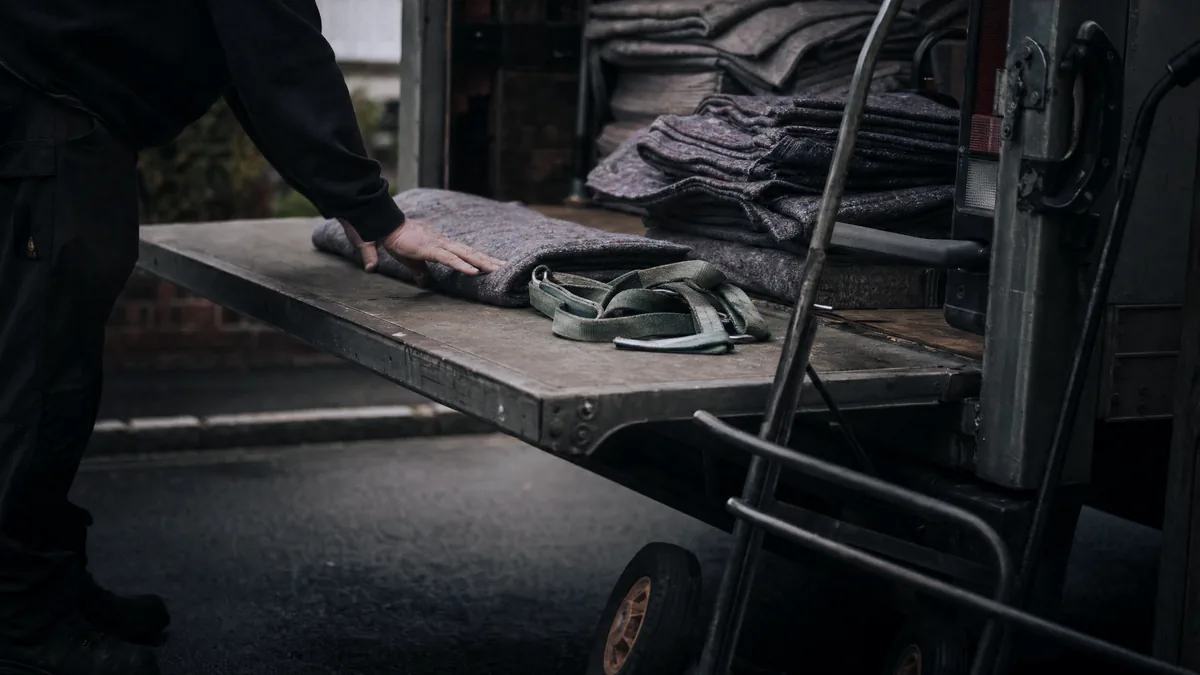
Photographs of your own crews and vans beat stock images every time. Blankets on a wardrobe, a sofa strapped in properly, floor protection down in a hallway, a crew carrying a mattress through a narrow door. These are not glamorous pictures and that is precisely why they work. We include AI image creation free on every tier if you have nothing usable, but on a removals site your own photos of real jobs are worth more.
Reviews should be visible on the page, not hidden behind a link. Pick ones that mention something specific, the awkward staircase, the day the completion moved, the care taken with a piano. And say who you are: how long you have been running, whether crews are employed or subcontracted, whether the same team does the pack and the move. Buyers in a high trust purchase want to know who you would be dealing with, and the same is true of your customers.
If writing all of that feels like the hard part, our notes on writing the words for your own website will get you started. AI copywriting is included free with every package too, and you can supply your own words instead or mix the two.
What a removals website costs
Ten pages covers most removals firms comfortably. With us that is the Essential tier at £79 a month plus VAT, which includes hosting, SSL, business email, the Nova editor so you can change prices and text yourself, a service area map, image gallery, FAQ section, reviews, a floating call bar and a free redesign each year.
If you want separate pages for several towns plus long distance and European moves, Professional at £99 a month plus VAT gives you fifteen pages. Extra pages are £10 a month each, or five for £40 a month, all plus VAT. A very small firm doing local jobs only could sit on Starter at £49 a month plus VAT for five pages, though you lose the blog unless you add it at £10 a month.
You pay the first three months up front to start, then monthly from month four. There is no setup fee and no contract, so you can cancel any month with a month's notice. If you would rather own the site outright, that is a separate one off price list and we go through the trade offs in should you own your website or rent it?. You can price up your website in a couple of minutes without speaking to anyone.
Renting is not right for everyone. If you have cash sitting there and you want the asset on your books, buy it. If your website is already fine and just needs better content, do not replace it, rewrite it.
Frequently asked questions
Do I need an instant quote calculator on my removals site?
Only if your pricing is genuinely simple. Most removals jobs depend on volume and access, and a calculator that guesses badly creates arguments later. A short enquiry form that books a survey usually works better. If you do want one, a price calculator is an option at £25 a month plus VAT, or included on the Business tier.
Should I publish my prices?
Publishing a from price for small jobs and packing materials helps filter enquiries. Publishing a fixed price for a full house move is risky because the variables are too wide. A middle path works well: explain what drives the price, give the range for a typical two bed local move if you are comfortable, and be clear that the survey sets the final figure.
How many photos should I put on the site?
Enough to show the work, not so many that the pages crawl. Twenty to thirty good ones spread across the service pages and a gallery is plenty. Keep file sizes sensible, because most movers are browsing on a phone and a slow page loses them before the first picture appears.
Can I update prices and storage availability myself?
Yes. Every site comes with the Nova editor so you can change words, prices and photos whenever you like, and content changes are unlimited and free whether you do them or ask us. One design revision is included when the site is built; after that the layout stays put until your free annual redesign.
Where to start
Get the survey explained, the insurance stated properly, storage priced clearly and the quote form down to a size people will finish. Do those four things and your site is doing more than most removals websites in the country. The rest is photos of your own crews and honest words about how you work.
RentAWeb builds and runs small business websites for a monthly fee, with no contract and no setup fee. Hosting, email, the editor, content changes and a yearly redesign are all included, and everything is done remotely by phone, email and video. Have a look at what a rented website costs if you want the numbers in front of you.