
Good garage website design does four jobs: it says exactly which services you offer, which makes and models you handle, how someone books an MOT or a repair, and when you are open. Everything else is decoration. An independent garage or MOT centre is usually being found by someone whose car is making a noise today, so the site has to answer practical questions fast and give them a phone number they can press.
Why opening hours matter more than anything else on the page
Most visits to a car repair garage website happen because something has gone wrong. The MOT ran out, the brakes are grinding, the warning light came on during the school run. That person is not browsing. They want to know whether they can turn up at half seven tomorrow morning and whether you answer the phone on a Saturday.
Put the hours where they cannot be missed: near the top of the home page and on every contact page. Spell out Saturday separately, because that is the line people actually scan for. If you close for an hour at lunch, say so. If you take drop offs before you officially open, say that too, because it is the sort of detail that wins the job over the garage two streets away.
Keep it current. Bank holidays, Christmas shutdown, the week you are short staffed. On a rented site you can change that line yourself in a minute, or ask us and it gets changed, because content edits are unlimited and free.
What services should a garage website list?
List them individually, not as "all mechanical repairs undertaken". People search for the specific thing they need, and a page or a clear section per service gives them something to land on and gives you something to send a customer to.
- MOT testing, with the classes you are approved for (class 4 cars, class 7 light commercials, class 1 and 2 bikes if you do them)
- Servicing, broken down into interim, full and manufacturer schedule servicing
- Diagnostics, including what equipment you run and whether you do engine management faults
- Brakes, clutches, cambelts and exhausts as named jobs
- Tyres, including whether you can order in and how fast
- Air conditioning regas, and whether you handle R1234yf as well as the older gas
- Electrics and batteries, including stop start batteries that need coding
- Hybrid and EV work, if you have the qualified staff and the equipment
- Courtesy car, collection, or a lift home, which is often the deciding factor
That list is also what separates you from a fast fit chain. A chain page is generic by design. Yours can say that the cambelt kit you fit on a 1.6 diesel is a quality aftermarket kit with the tensioner included, and that is the sort of sentence that gets you the job.
Say which makes you cover
"Do you do Volvos?" is one of the most common questions a garage gets asked. Answer it on the site. A short section listing the makes you are comfortable with, plus a line saying you handle most makes and models and will say honestly if a job is better suited elsewhere, does more good than any stock photo of a gleaming engine bay.
If you have dealer level software for a particular marque, or you are the person locally who knows old Land Rovers, build a page around it. Specialism is the one thing a main dealer cannot copy and a chain will not bother with.
Say what you do not do
Bodywork, gearbox rebuilds, LPG conversions, motorhomes over a certain weight. Writing down what you turn away saves you the phone calls that waste ten minutes each and annoy the caller. It also reads as honest, which is the whole battle for an independent garage.
MOT booking: form, phone or live diary?
Most garages do not need a live booking diary. What they need is a short form that captures registration, make and model, mileage, the customer's phone number and three dates that would suit them, plus a phone number in a floating bar so a mobile visitor is one tap from ringing you.
The reason is simple. An MOT slot is easy to book online, but a repair is not, because you do not know how long it takes until you have seen the car. A form lets you ring back and sort both at once. A live diary that lets someone book a two hour slot for a job that turns out to be a day's work causes more problems than it solves.
If you do want online bookings, it should be for MOTs and standard services only, with everything else going through a callback. On our packages online bookings are included on the Business tier and are an option at £20 a month on the others, all excluding VAT. Plenty of MOT centre websites run perfectly well on a form and a phone number instead.
One more thing worth having: an MOT reminder sign up. A simple field where a customer leaves their registration and expiry date, so you can text them next year. It costs nothing to add and it is the cheapest repeat work you will ever get.
Pricing: how honest can you be without pinning yourself down?
You cannot publish a price for a repair you have not seen. You can publish quite a lot else, and customers reward you for it.
Publish the MOT price, or say you charge the maximum fee and when you discount it. Publish your hourly labour rate, or at least a band. Publish fixed price interim and full servicing with what is included. For everything else, give a guide range and say plainly what moves the number, for example "a front brake pads and discs job on a common family car is usually between X and Y depending on parts, and we will confirm before we start".
Then add the sentence that matters most: no work goes ahead without a call and your agreement. Main dealers are not trusted on price. That is your opening, and it is an opening you take with clear words rather than clever design. If you are writing those sections yourself, writing the words for your own website covers how to do it without it sounding stiff.
Standing up against main dealers and chains
You will not out spend either of them, so do not try. Compete on the things they are weak at.
- Named people. A photo of the two or three people who will actually work on the car, with first names and how long they have been doing it.
- Warranty reassurance. One short paragraph explaining that having the car serviced at an independent garage to schedule with the right parts does not invalidate a manufacturer warranty. Half your potential customers believe it does.
- Reviews. Real ones, on the page, ideally mentioning jobs by name. A review section is included on every one of our tiers.
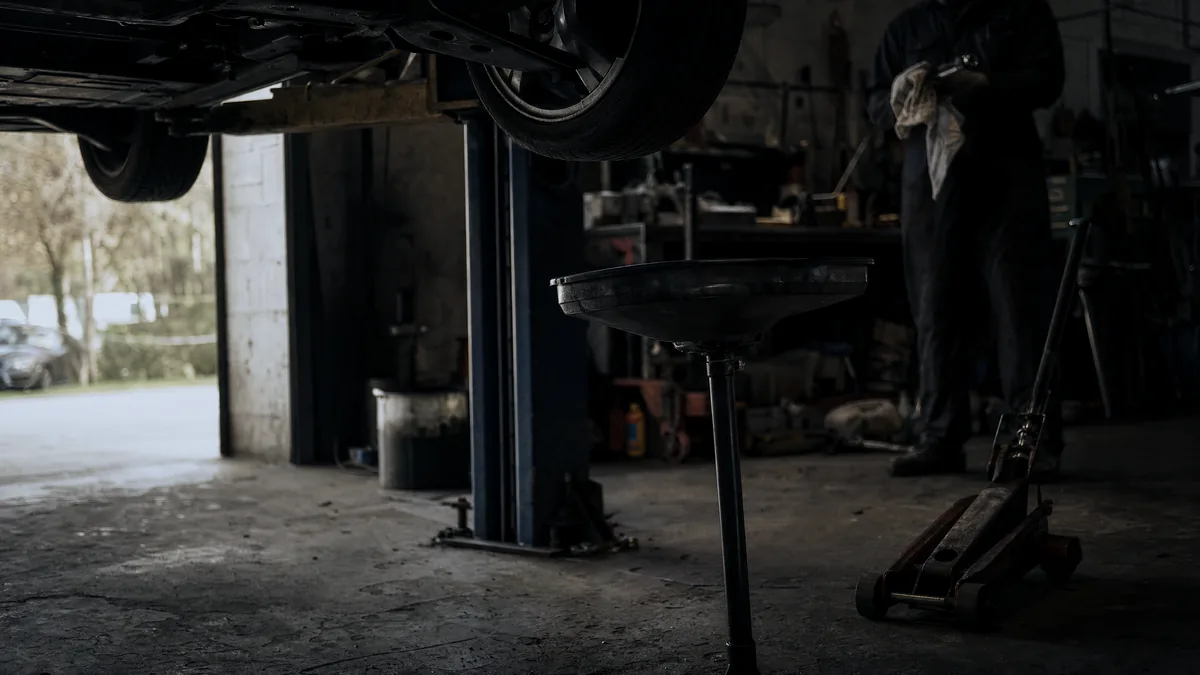
- Photos of your workshop. Not stock images. The actual ramps, the actual yard, the actual sign on the unit so people recognise it when they drive up.
- Where you are. A map, the nearest landmark, and where to park if the forecourt is full.
If you also sell cars alongside the workshop, the stock side has its own requirements and we covered those in what a car dealer website has to handle.
Getting found by people in your town
A garage draws from a small radius. Someone will drive fifteen minutes to a trusted mechanic, rarely forty. So the site should be clear about the towns and villages you serve, and each service section should mention the area naturally rather than stuffing a list of place names in the footer.
A service area map is included on every tier we sell, which handles the geography. The bigger lever is usually your Google Business Profile, kept accurate and matching the hours on your site. We went through the practical steps in getting found on Google when you only work locally. None of this is a guarantee of position, but matching, accurate, specific information is what tends to help.
Speed counts too. A customer standing in a cold car park with one bar of signal will not wait for a heavy page to load. Why a slow website costs you work explains what usually causes the delay.
How many pages does a garage site need, and what does it cost?
Most independent garages land between five and twelve pages. Home, MOT, servicing, repairs and diagnostics, tyres, about, contact, and then one page each for any specialism worth having its own.
Our Starter package covers up to 5 pages at £49 a month and Essential covers up to 10 pages at £79 a month, both excluding VAT. Professional goes to 15 pages at £99 and Business to 25 pages at £149, again excluding VAT. If you are sitting between two tiers, extra pages are £10 a month each or five for £40 a month. A blog is included on everything except Starter, where it is £10 a month, and most garages do not need one, though a seasonal post about winter checks or the new MOT rules does no harm.
You pay the first three months up front to start, then monthly from month four. There is no setup fee, no contract, and you can cancel in any month with a month's notice. One design revision is included; changing words, prices and photos is unlimited and free. You can price up your website in a couple of minutes to see where a garage of your size lands, and if you would rather own the site outright there is a separate one off price list, explained in should you own your website or rent it?
If you are weighing up a local designer, a platform or doing it yourself, what a trade business website actually needs sets out the common ground across the trades before you commit to anything.
Frequently asked questions
Do I need a separate website for my MOT centre?
Usually not. If the MOT bay and the workshop are the same business at the same address, one site with a strong MOT page works better than two thin sites competing with each other. Two sites only make sense if they are genuinely separate businesses with different names, addresses and phone numbers.
Should I put my labour rate on the site?
It is your call, but publishing it tends to filter out the price shoppers before they ring, and it reassures the people who are comparing you with a main dealer. If you would rather not, publish fixed price servicing and the MOT fee instead, and say that quotes are free and confirmed before any work starts.
Can customers book an MOT online without me buying extra software?
Yes. A contact form that collects registration, mileage and three preferred dates does the job, and you confirm by phone. A live online diary is an option at £20 a month on most of our tiers and included on Business, all excluding VAT, but a lot of garages are better off keeping control of the diary.
What photos should I use on a garage website?
Your own. The ramps, the yard, the unit from the road, a technician's hands on a job. Stock images of showroom cars make an independent garage look like everyone else. AI image creation is included free on our packages if you need to fill gaps, but real workshop photos always do better.
Who updates the site when my prices change?
You can, using the Nova editor that comes with every package, or you send us the change and we do it. Content changes are unlimited and free, so putting up this year's MOT price or a new set of opening hours never costs you anything extra.
The short version
A garage website earns its keep by being specific. Clear hours, named services, the makes you cover, a straight line on pricing and an easy way to book an MOT or ask for a callback. Design matters far less than the information being right and current.
RentAWeb builds and runs that kind of site for a monthly fee, hosting, email, SSL and edits included, with no contract and a free redesign every year. Everything is done remotely by phone, email and video from Grantham, and you can see who you would be dealing with or look at what a rented website costs before you speak to anyone.